
START WITH THE BASICS
A walk entry should be easy to understand later.
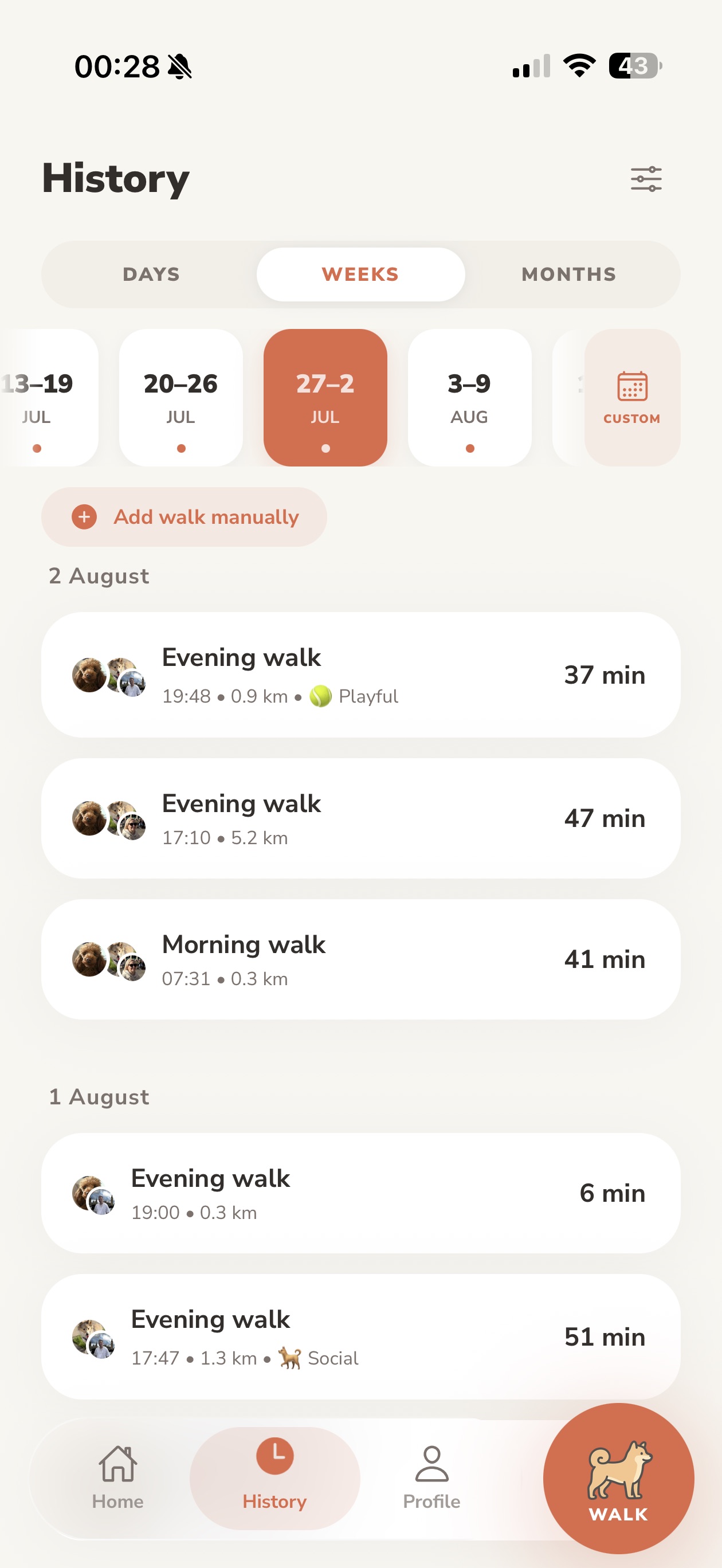
The point is not to document every minute. A short record is enough to remind you what happened and help anyone else sharing dog care see the recent routine.
When the walk happened
The date and time make the entry useful later, especially when more than one person walks the dog.
How long you were out
Duration is usually the clearest way to understand the walk at a glance.
How far you went
Distance adds context, but it does not need to be the goal of every walk.
Which dog went
If you have more than one dog, keep each dog’s history separate even when they walk together.
Anything worth remembering
A potty break, photo, short note, or walk vibe can be useful when something stands out.
ADD CONTEXT WHEN IT HELPS
Not every field needs an answer.
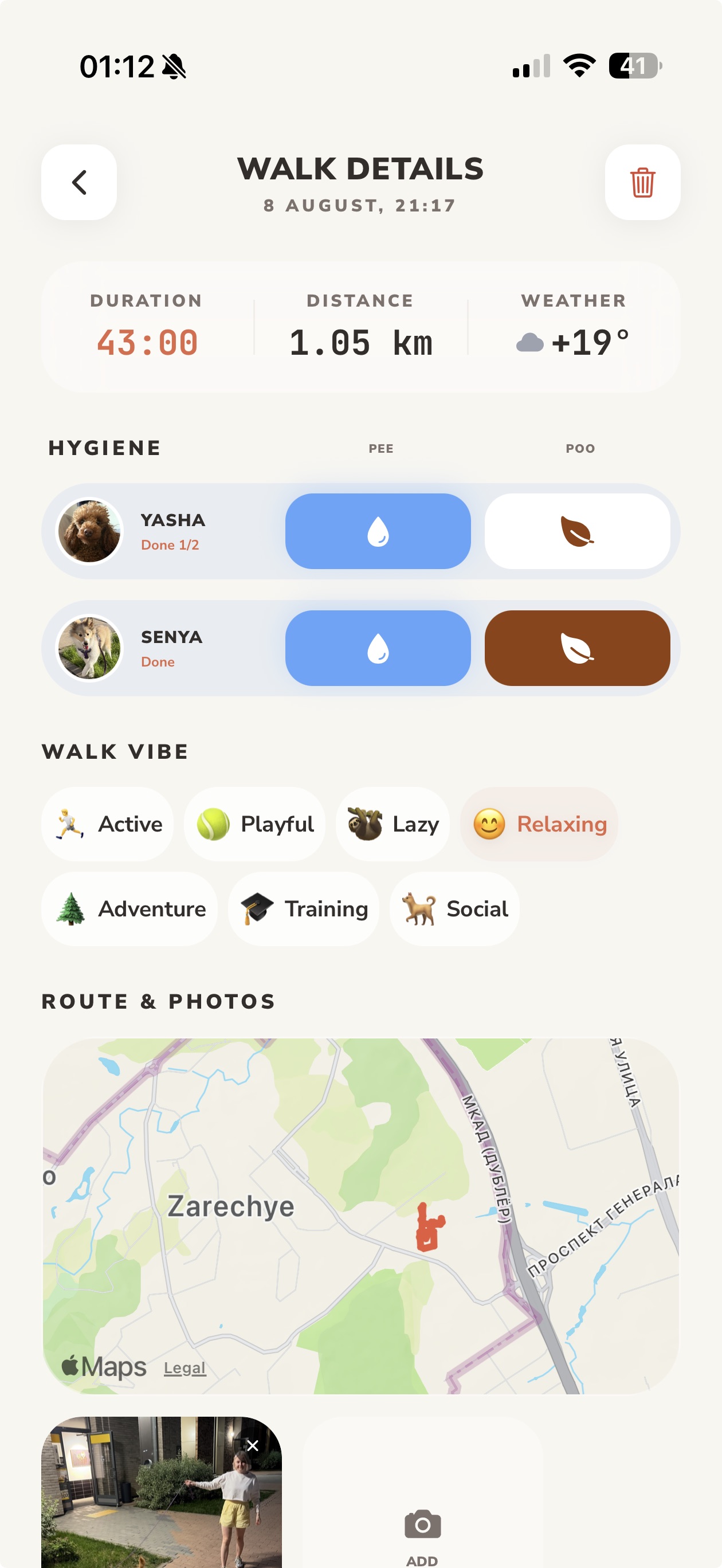
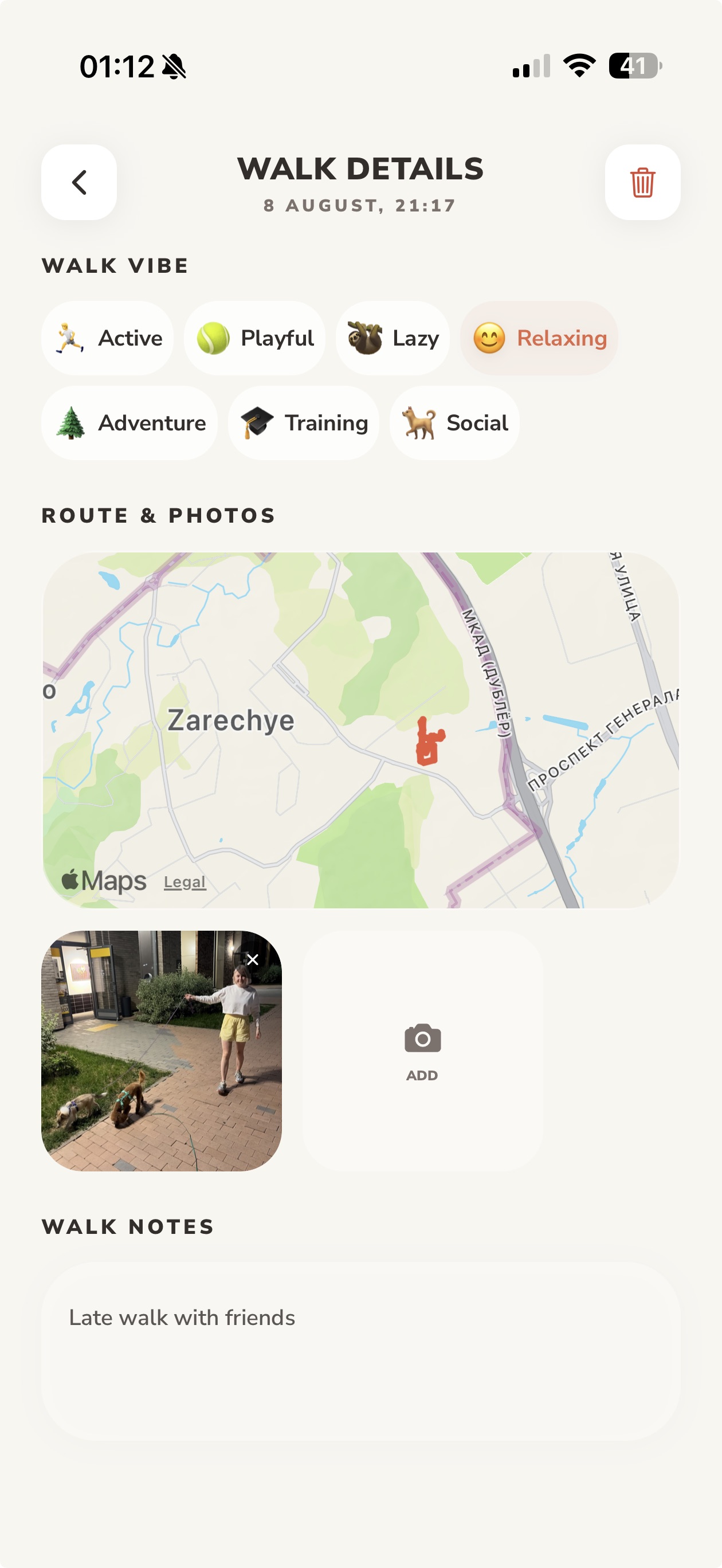
A finished walk can include potty breaks, weather, a route, a photo, a note, or a simple walk vibe. These details are useful when they add context. They do not need to become a checklist you complete after every outing.
Potty-break records can help with everyday routines, but one entry does not tell you whether a dog is healthy. Speak with a veterinarian if something seems unusual.
KEEP IT LIGHT
You do not need to turn every walk into a report.
It is fine to skip:
- A long note when nothing unusual happened.
- A photo from every routine potty break.
- A walk vibe when you do not have anything to add.
- A perfectly accurate route or distance on every short outing.
- Any detail you know you will never look at again.
If logging the walk feels like work, the system is too heavy.
LOOK BACK, NOT AT ONE NUMBER
A few weeks of history are more useful than one perfect entry.
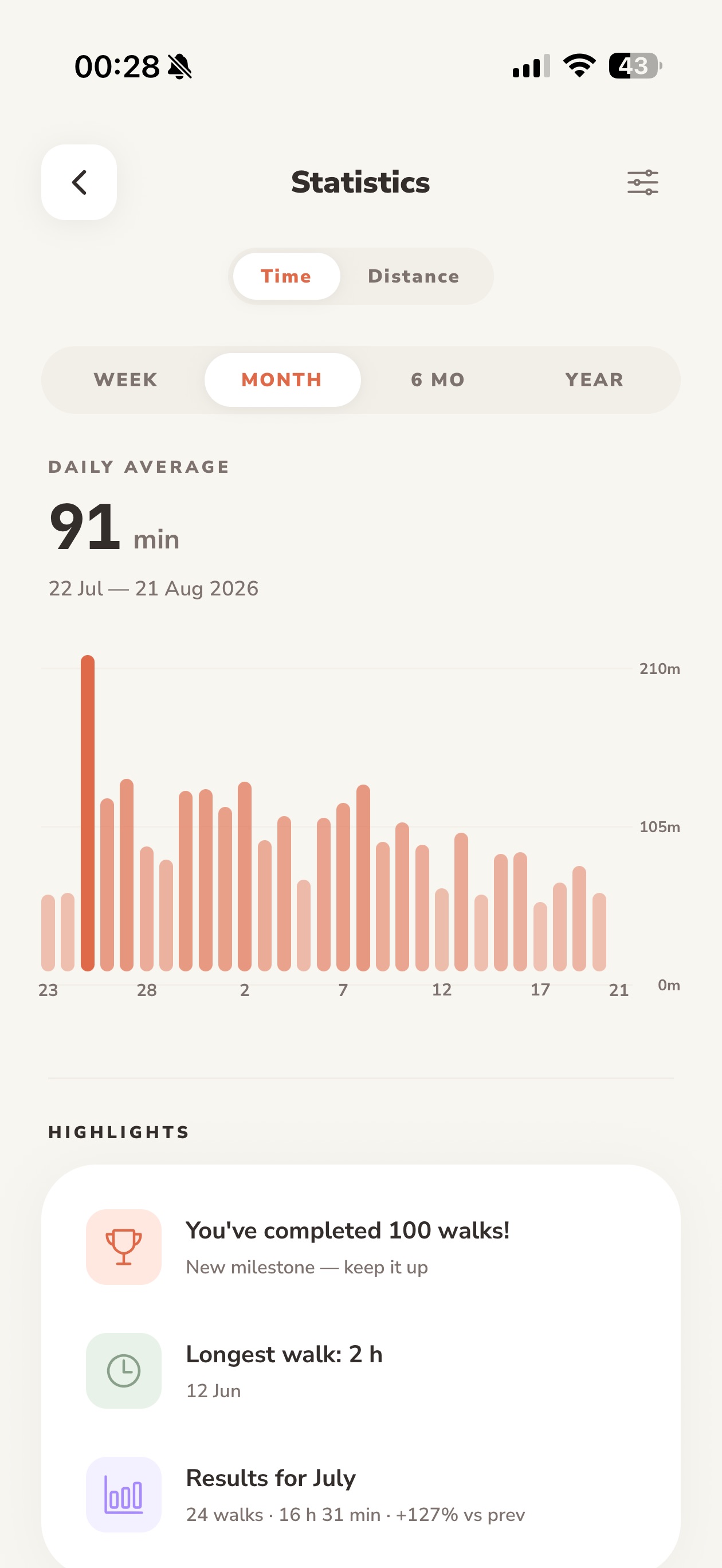
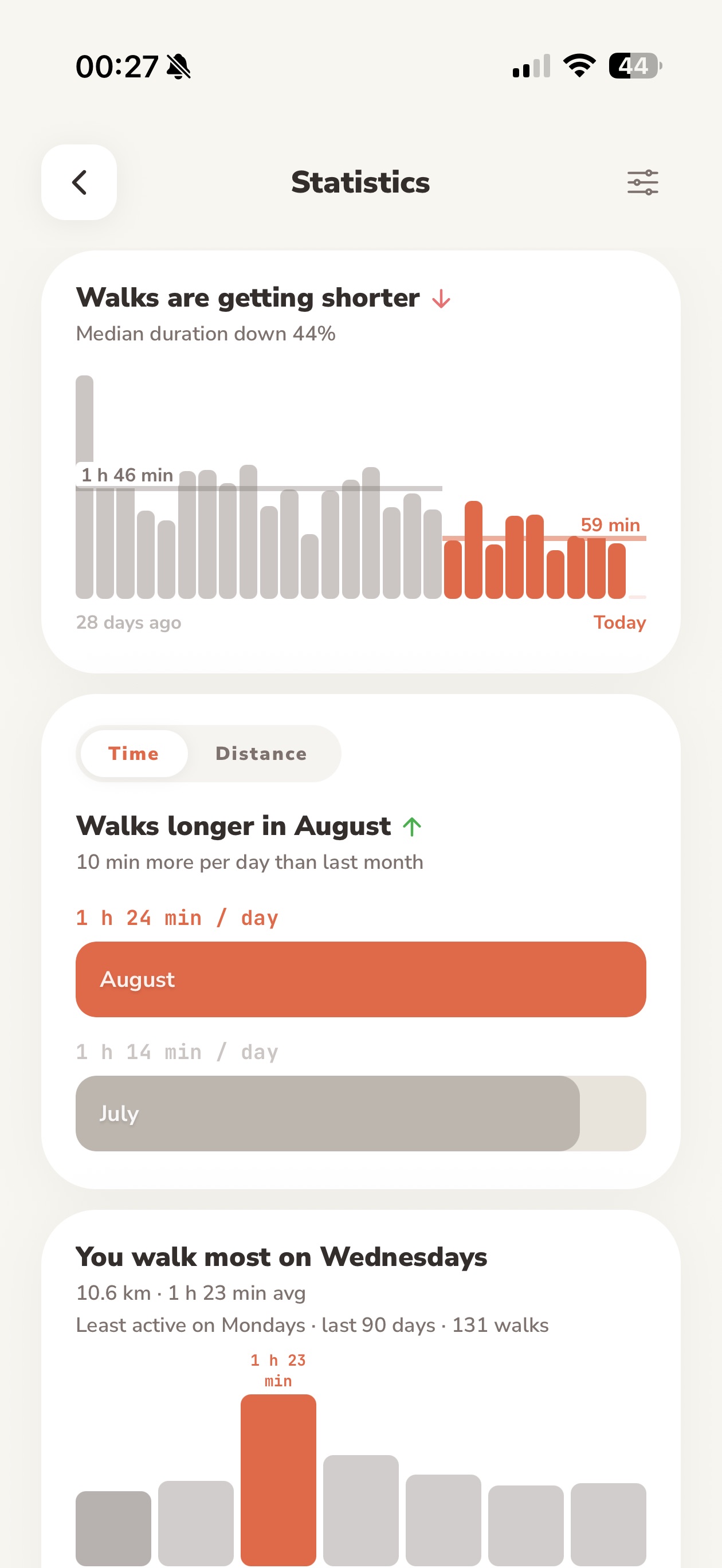
Over time, a log can show how often you walk, how long you usually stay out, and whether the routine has changed. A shorter week is not automatically a bad week; weather, health, travel, and everyday life all matter.
A SIMPLE LOGGING HABIT
Finish the record while the walk is still fresh.
- Start the walk as you leave.
- Mark potty breaks if that information matters to you.
- Finish the walk when you get home.
- Add a photo or note only if there is something worth keeping.
- Look at the history occasionally, not after every walk.
In Lapka, time, distance, and route are saved with the walk. You can add potty marks, photos, notes, and a walk vibe, then find the entry in history later. See what Lapka records during a walk.
IN LAPKA
Keep the parts of the walk you will actually use.
Lapka is available on iPhone. The app is free to download. Some features require Lapka Plus.