THE HANDOFF IS THE HARD PART
Most confusion happens between walks.
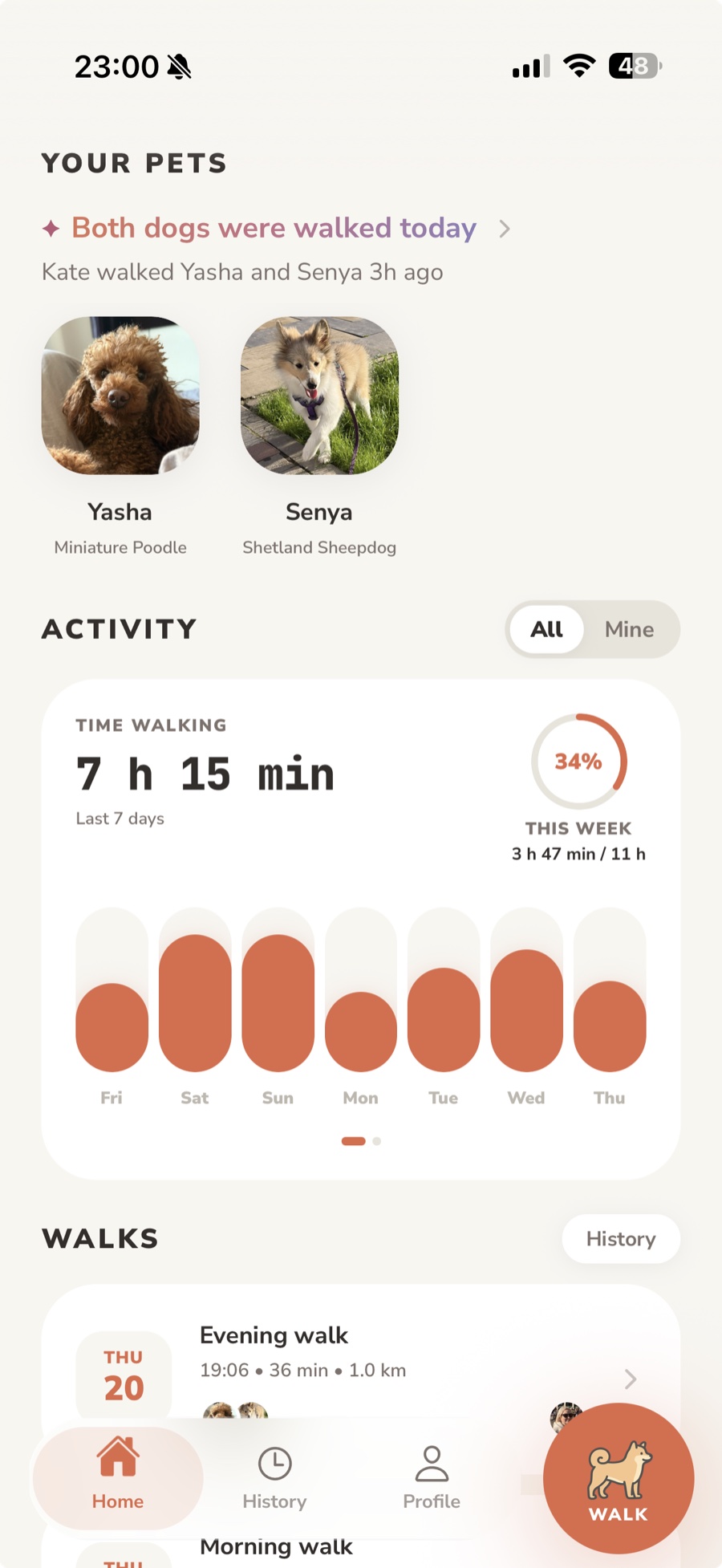
A partner, family member, roommate, or sitter may have already taken the dog out. Messages work until one gets buried, arrives late, or nobody remembers to send it. A shared status answers the question without starting another conversation.
KEEP THE RECORD SHORT
Record only what helps the next person.
Not every walk needs a detailed diary. Most of the time, a few basics are enough for a useful dog walking log.
When the dog went out
The last walk time is usually the first thing the next person needs.
Who went
A name removes the need to ask around or search through messages.
How long the walk was
Duration and distance give useful context without turning the walk into a report.
Toilet breaks
Pee and poo can be marked during the walk when that information matters at home.
Anything unusual
A short note or photo is enough if the next person should know something.
ONE DOG, SHARED ACCESS
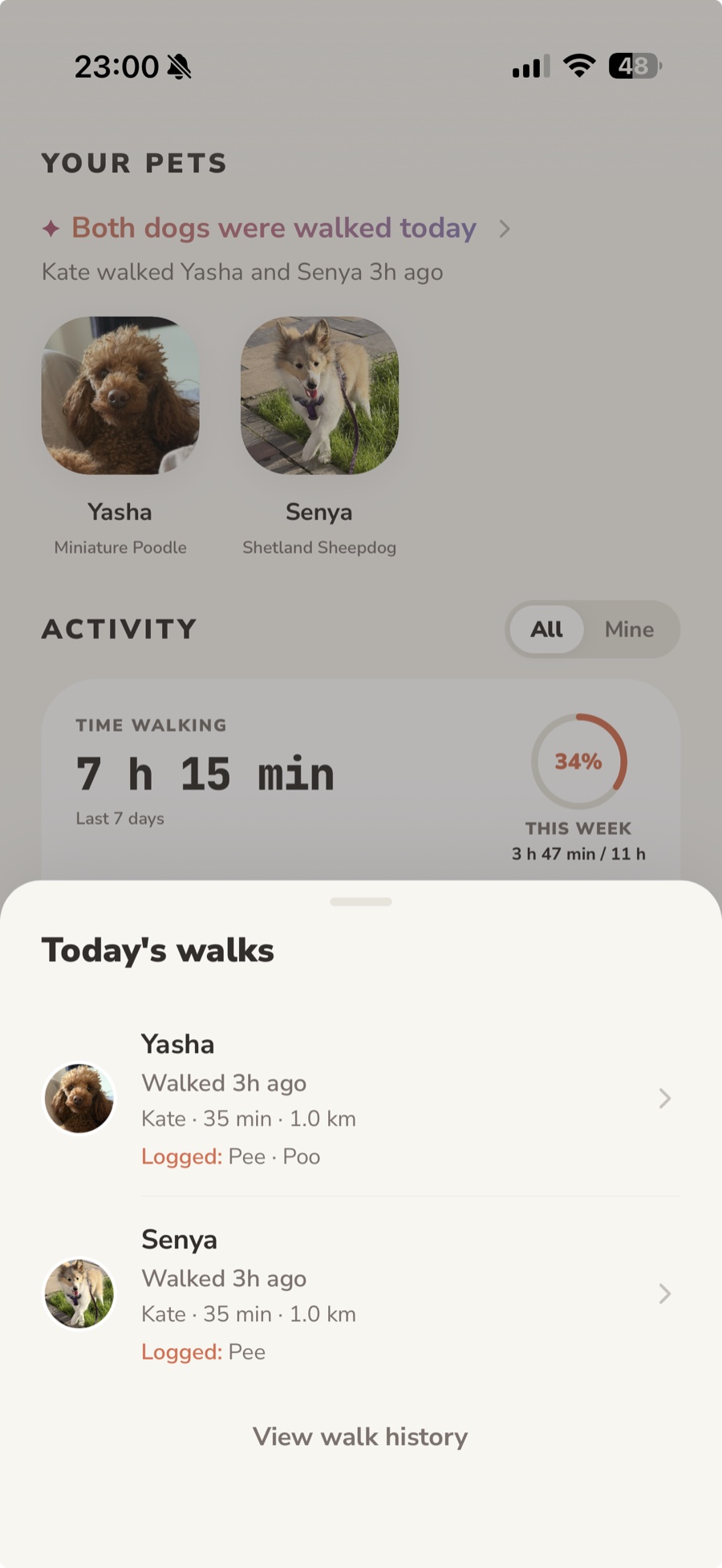
Give the right people access to the same dog profile.
In Lapka, each dog has a walk access list. You can invite another person who helps with that dog, and their walks appear in the same history.
WHEN MORE THAN ONE DOG GOES
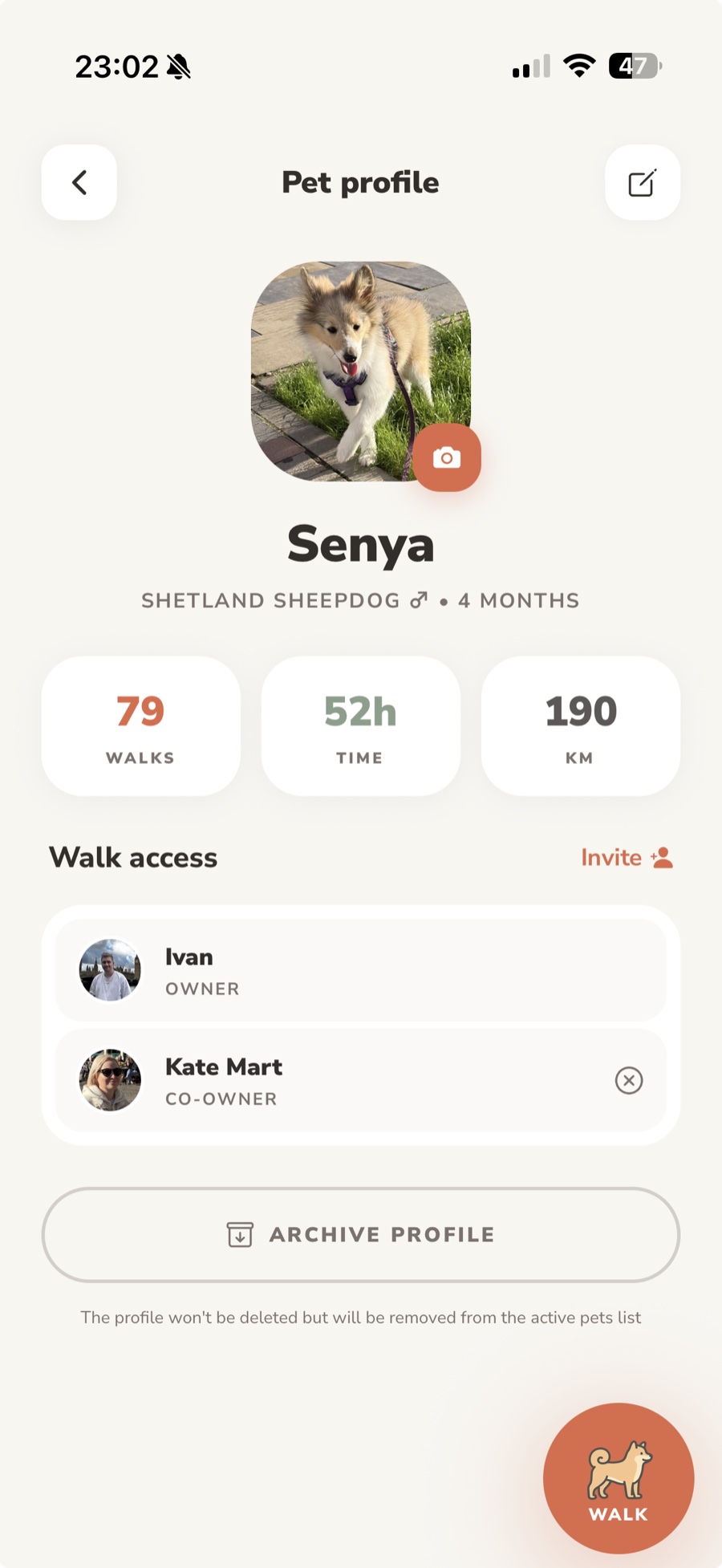
One walk can still keep each dog’s details separate.
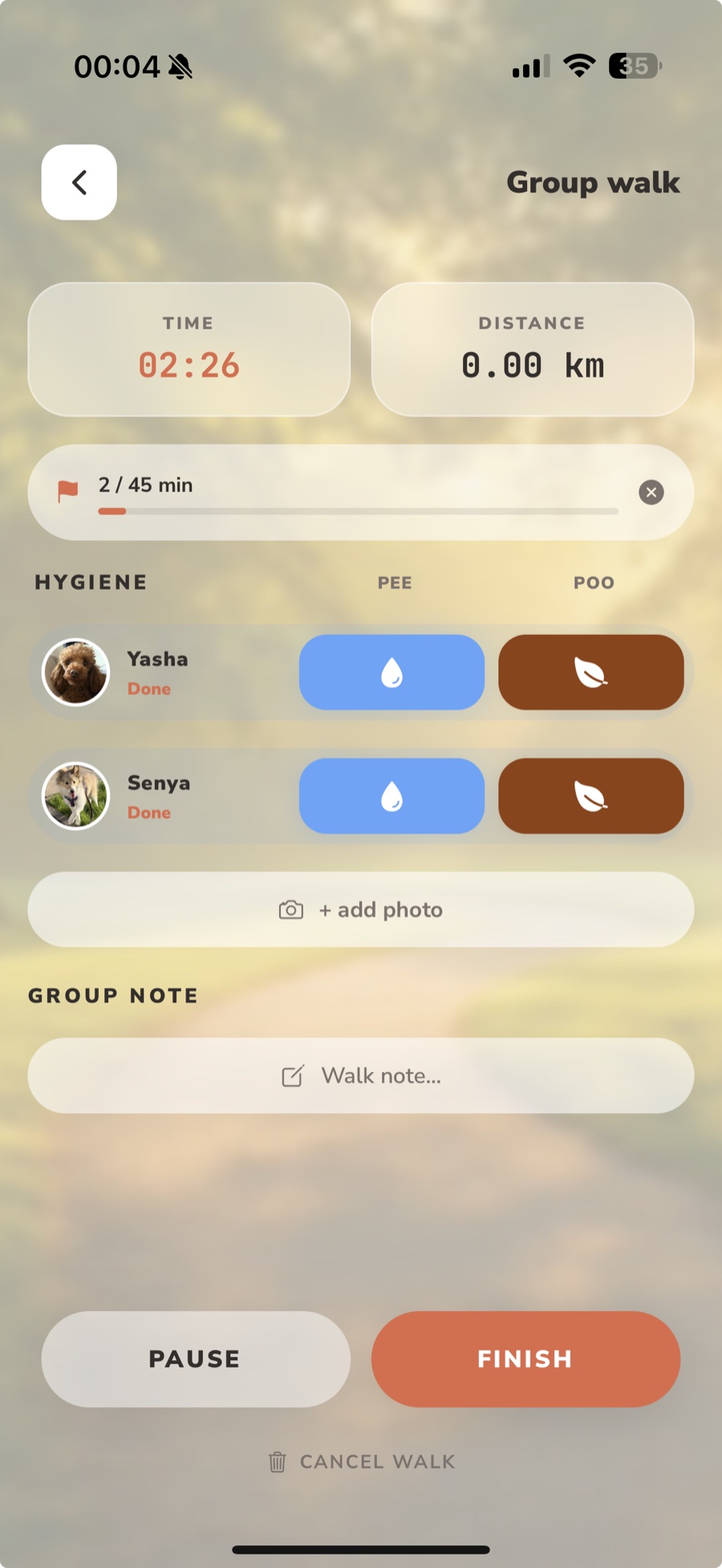
A group walk uses one timer, while toilet breaks are recorded for each dog. When the walk ends, both dogs get their own entry in the shared history.
A ROUTINE PEOPLE WILL ACTUALLY USE
Agree on one simple rule.
Shared tracking only works when it is easier than asking everyone what happened. Keep the routine small:
- Check the last-walk status before heading out.
- Start the walk as you leave.
- Mark toilet breaks if they matter to your household.
- Finish the walk when you get home.
- Add a note only when the next person needs it.
The goal is not to record every detail. It is to make the next handoff clear. See what Lapka records during a walk.
IN LAPKA
The same walk history for everyone who helps.
Lapka is available on iPhone. The app is free to download. Some features require Lapka Plus.