
START WITH TODAY
A comfortable walk is a better starting point than a breed chart.
Think about a recent walk your dog finished comfortably — not the longest outing you have ever done together, and not the one that left them exhausted. That is a sensible baseline for the next week.
If you want to adjust the routine, change one thing at a time: add a little time, choose a hillier or quieter route, make room for more sniffing, or split one longer walk into two shorter ones. Small changes make it easier to see what actually helps.
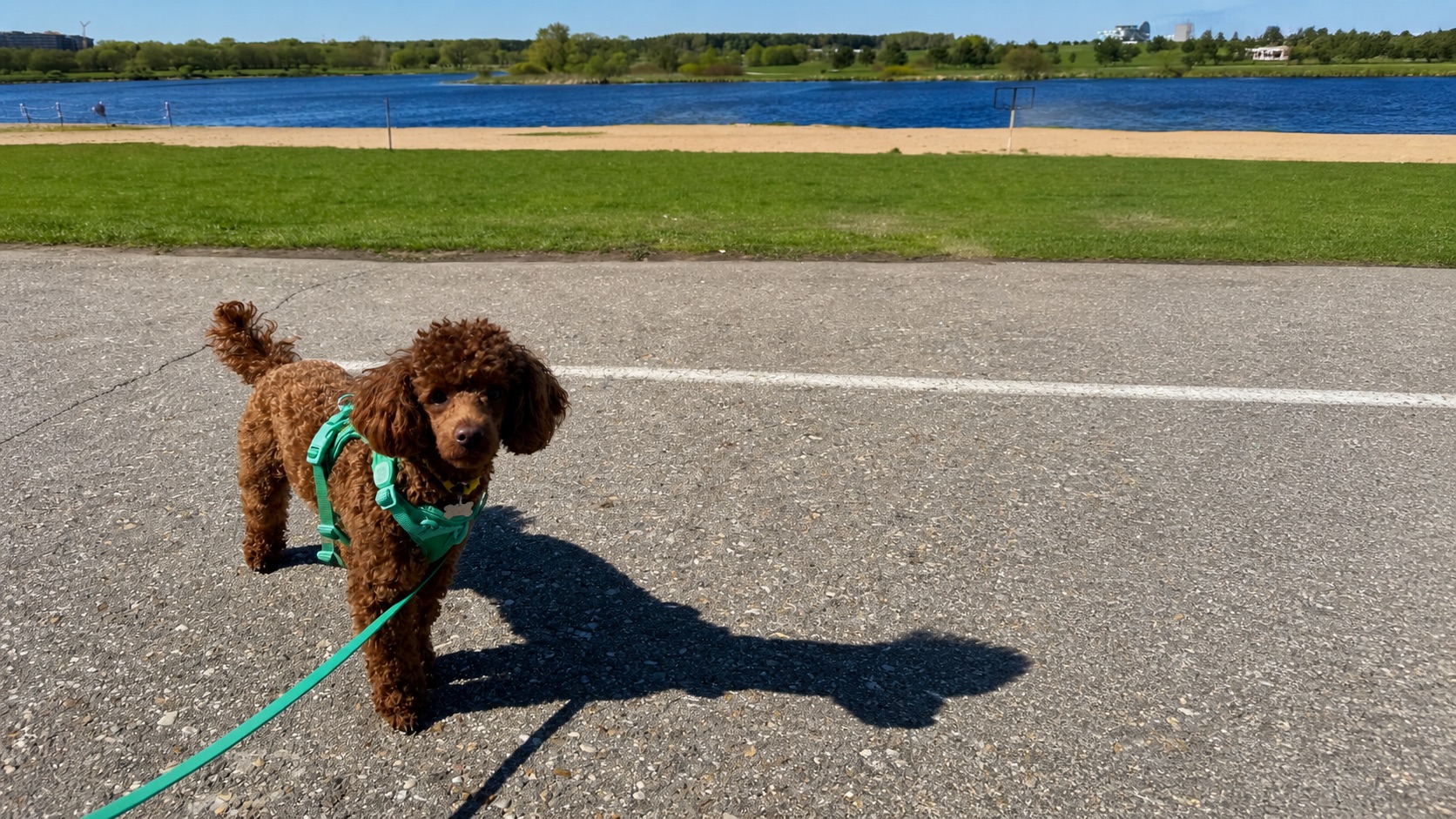
AGE AND HEALTH MATTER
What feels easy for one dog can be demanding for another.
Puppies
Keep walks short, positive, and flexible. Growing joints are not a reason to avoid walks altogether, but long runs, forced hikes, and repetitive high-impact exercise are not a safe default.
Adult dogs
Activity needs vary beyond breed labels. Previous routine, fitness, temperament, pace, heat, and the chance to sniff all change what a walk asks of your dog.
Older or unwell dogs
Many still enjoy regular outings, but a slower pace, flatter route, or several shorter walks may be more comfortable. Ask your veterinarian before increasing activity.
LOOK AT RECOVERY
Exhaustion is not the goal.
After a comfortable walk, your dog should be able to settle normally. Stop, offer rest, and contact your veterinarian if you notice pain, trouble breathing, weakness, or a change that concerns you.
- Limps, stiffness, or reluctance to keep moving.
- Repeated attempts to sit or lie down.
- Unusually heavy panting or difficulty breathing.
- Difficulty getting up, climbing a curb, or settling afterward.
- A clear change in mood or interest in familiar activities.
MORE THAN MINUTES
Some walks are for moving. Others are for being a dog.
A calm sniff walk can be satisfying even when it is not physically intense. A brisk walk or jog asks more of a dog and deserves a slower build-up. Heat, humidity, hard ground, ice, and poor air quality can also make a familiar route more demanding.
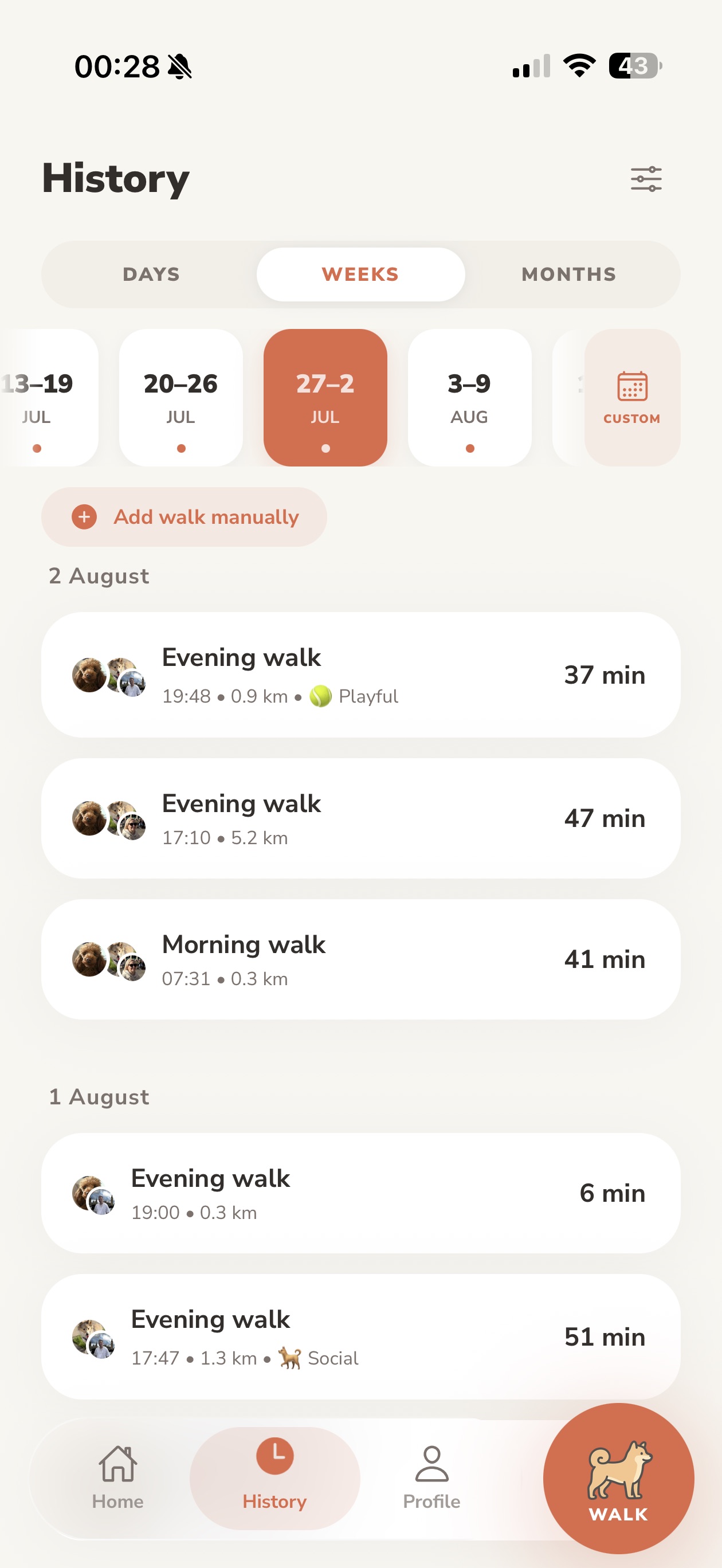
Keep a little context, not a perfect report: how long you were out, whether the walk was calm or brisk, and anything unusual. A few weeks of history are more useful than a generic rule. A simple walking log can make patterns easier to notice.
SOURCES
Further reading
This guide is general information, not veterinary advice.